Search Fares & Book Your Vehicle Transport
Loading Trains...
MON
TUE
WED
THU
FRI
SAT
SUN
Learn how Amtrak Auto Train vehicle transport works, review eligible vehicles, size limits, priority offloading, and check availability for your upcoming journey.
Speak to our 24/7 independent booking specialists. We can verify vehicle clearance, calculate bundle rates, and reserve priority vehicle offloading.
Driving your **car to florida** or up north to Virginia along the I-95 highway means facing heavy traffic, tolls, vehicle wear-and-tear, and high gas expenses. Upgrading to the **amtrak vehicle transport** service allows you to avoid all of this. You can sit back in a spacious reclining seat or sleep in your private cabin while a professional valet crew handles your vehicle.
When you choose **auto train car transport**, you arrive at your destination refreshed. Even better, you can pack your vehicle with all your vacation gear, luggage, golf clubs, and family items at no extra baggage cost. It represents a high-value option for families, snowbirds moving seasonally, and road trip enthusiasts. You can travel in budget-friendly Coach passenger seating or choose sleeper carriage accommodations like cozy Roomettes and spacious private Bedrooms.
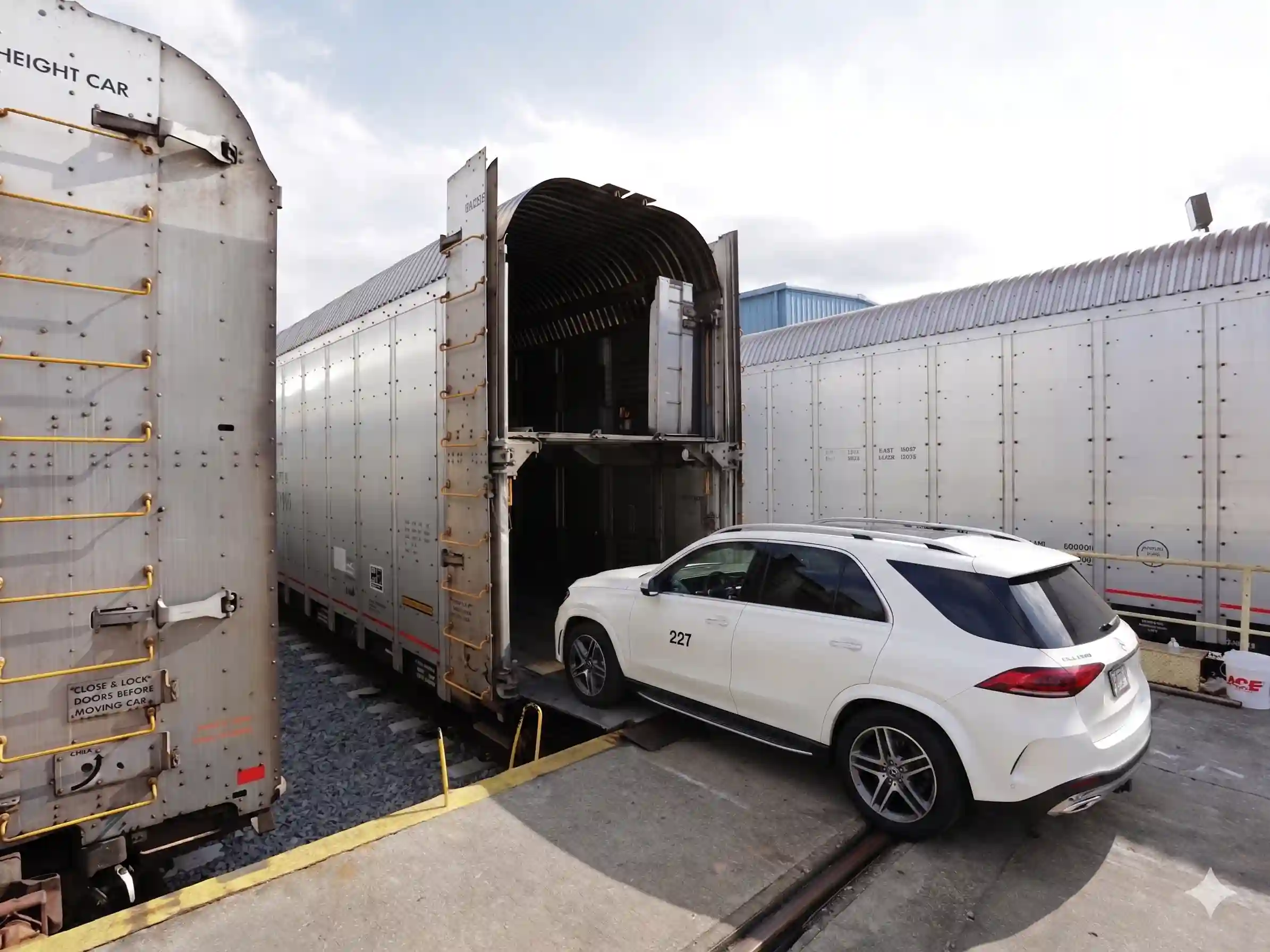
Your vehicle is secured inside fully enclosed double-decker auto carriers, shielding it from road debris, gravel, and adverse weather conditions during transit.
How fares are determined and tips to secure the lowest rates.
Vehicle fares on the Auto Train are calculated dynamically, separate from your passenger ticket. Key pricing variables include:
Amtrak accommodates a wide variety of passenger vehicle classes. Review the supported categories below.
Sedans, coupes, station wagons, sports cars, and convertibles. Vehicles must have a minimum of 4 inches of ground clearance.
SUVs, pickup trucks, crossover vehicles, and passenger vans. These are placed on the lower decks of the auto carriers with higher clearance limits.
Two-wheeled street bikes, touring motorcycles, trikes, and bikes with sidecars. Specialized tie-down wheel chocks are used for safety.
Small trailers, jet skis, and small boats on trailers. These must fit within the overall length and width constraints and require advance booking.
To fit inside the specialized rail auto carriers, all vehicles must comply with strict sizing and clearance constraints.
*Height limits include roof-mounted racks, roof boxes, and bicycle carriers. Rear-mounted bicycle racks must fit within the overall length limit. Low clearance vehicles (lowered suspensions) scrape on ramps and cannot board.
Standard vehicle offloading on the Auto Train operates on a randomized schedule and can take between 30 minutes and 2 hours after passenger deboarding. To avoid this wait, travelers can purchase a **priority vehicle offloading** upgrade.
This upgrade guarantees your vehicle is loaded onto specialized carrier decks and will be among the **first 30 vehicles unloaded** upon arrival at Lorton or Sanford terminals. This allows you to drive away within 30 minutes, bypassing the standard loading lines. It is highly popular among travelers with long drives or families with young children.
When you arrive at Lorton or Sanford terminal, pull directly into the vehicle staging lanes. An attendant will perform a visual inspection of your vehicle to document any pre-existing scratches or damage, and will attach a magnetic tracking number to your driver-side door.
Make sure to pack a separate carry-on bag with change of clothes, electronics chargers, and medications, as the auto carriers are locked and completely inaccessible during transit. Valets drive your vehicle onto the train carriers, and you will retain your own key fob or keys upon request at check-in.
Safety is the top priority during loading. After you drop off your vehicle in the staging lane, professional valet crews drive all vehicles onto the steel loading ramps. The cars are driven into specialized double-decker auto carriers.
Inside the carriers, attendants secure every vehicle by placing heavy-duty tie-down straps around all four wheels, preventing any movement during the overnight journey. Motorcycles are secured using specialized wheel chocks and ratchet straps. The carriers are then sealed, protecting your vehicle from wind, rain, and track debris.
Valet loading is handled entirely by professional crews. Insurances and safety tie-down procedures protect your vehicle during the transit corridor.
When the Auto Train arrives in Lorton, VA or Sanford, FL at 8:59 AM, passengers deboard first and head into the terminal waiting lounge. Valet drivers immediately begin unloading vehicles from the carriers.
As each car is driven off the ramps, an attendant parks it in the terminal driveway, leaving it running. The terminal PA system will announce vehicle tracking numbers. When your number is announced, walk out, collect your vehicle, and drive away. Standard offloading takes 30 minutes to 2 hours; priority offloading unloads your car within 30 minutes.
Prepare your vehicle correctly to ensure a seamless loading experience at check-in.
You must disable your vehicle's alarm system before loading. The motion and vibrations of the train during the overnight journey will trigger car alarms, which can drain your vehicle's battery. Check your owner's manual for instructions on disabling the motion sensor.
Because the auto carriers are locked and completely inaccessible during transit, you will not be able to retrieve anything from your vehicle after loading. Ensure you pack a separate carry-on bag containing changes of clothes, toiletries, electronics chargers, and medications to bring to your carriage. Sleeper suites like the Superliner Family Bedroom have dedicated luggage shelves. Check the daily Auto Train schedule and route map to time your terminal arrival perfectly.
Amtrak allows standard passenger cars, SUVs, pickup trucks, passenger vans, motorcycles, jet skis on trailers, and small trailers. All vehicles must be in running condition.
Standard vehicles must not exceed 65 inches in height and 84 inches in width. Oversized vehicles (SUVs, vans, trucks) can be up to 85 inches in height (including roof racks) and 84 inches in width. The maximum overall length limit is 20 feet 8 inches.
Vehicles must have at least 4 inches (10 cm) of ground clearance to safely navigate the loading ramps and board the auto carrier train.
Priority Vehicle Offloading is an optional upgrade that guarantees your vehicle will be among the first 30 unloaded from the auto carriers upon arrival, reducing your wait time at the destination terminal. It is highly recommended if you have a tight schedule.
Vehicle transport costs vary dynamically based on vehicle size class (standard car vs. oversized vehicle), travel date demand, and lead booking time. Rates typically start around $150 to $250 one-way for standard cars.
Standard vehicle offloading begins immediately upon arrival and can take anywhere from 30 minutes to 2 hours. Upgrading to priority offloading guarantees you are on the road within 30 minutes of arrival.
No. For safety and security reasons, the auto carrier cars are locked and completely inaccessible to passengers for the entire duration of the overnight rail journey.
You do not need to empty your vehicle, which is a major benefit of the Auto Train. You can leave luggage packed inside the trunk or back seats. However, you must pack a separate carry-on bag with change of clothes and medications for the passenger cabin.
Yes, motorcycles are allowed. This includes two-wheeled street bikes, touring bikes, and trikes. All motorcycles must check in by the early deadline of 2:00 PM.
You will leave your keys with the valet drivers at the check-in lane. Valet drivers handle the loading and securing of your vehicle, and your keys will be held securely until arrival.
Vehicle check-in closes strictly at 2:30 PM for cars, SUVs, and vans. Motorcycles and oversized vehicles must check in by 2:00 PM. No exceptions are made for late arrivals.
Yes, roof racks and bicycle racks are allowed, but they must fit within the overall 85-inch height and 84-inch width limits. Bike racks mounted on the back must fit within the 20'8" length limit.
Yes, trailers, jet skis, and small boats on trailers are permitted. They must be booked through our customer service desk to verify sizing, and must check in by 2:00 PM.
No, for safety and insurance reasons, professional Amtrak valet drivers drive all vehicles onto and off of the auto carrier carriages.
Yes, electric vehicles are fully permitted. However, there are no charging facilities on board the train, so ensure your EV has sufficient charge for arrival.
Yes, you must disable your vehicle's alarm system before loading. The motion of the train will trigger car alarms, which can drain your vehicle's battery during the overnight ride.
Yes, Amtrak accepts liability for transit-related damage to vehicles, subject to inspection. A visual inspection is conducted at check-in, and any pre-existing damage is documented.
Vehicles with less than 4 inches of clearance (such as lowered sports cars) cannot be loaded, as they will scrape on the steel carriage ramps. Check-in staff will inspect clearance.
Because auto carrier space is strictly limited and shared across all passengers, vehicle slots sell out quickly during peak seasons. We recommend reserving space 3 to 6 months in advance.
Lorton Terminal is located at 8100 Lorton Road, Lorton, VA 22079. Check-in lanes are clearly marked as you enter the terminal driveway.
Our ticketing specialists are available 24/7. Auto carrier space is strictly limited and slots fill up months in advance during peak season. Contact our reservation support desk for immediate booking assistance, live fare checks, and secure payment processing.

24/7 HELPLINE - NO WAITING